
Organic skincare carries a reputation problem, largely because so many assumptions about it were formed decades ago and never updated. Shoppers still repeat claims about weak formulas, unstable actives, or products that smell nice but do little else, even as certified organic ranges have moved well past that image. Nourish London‘s catalogue, spanning cleansers, serums, balms, oils, and mists, offers a useful case study for testing which of these myths hold up and which simply do not.
The ‘Natural Means Gentler’ Myth: How Nourish London’s Kale Enzymatic Exfoliator Delivers Real Results
A common assumption holds that anything labelled natural must be softer in action, as though gentleness and effectiveness sit at opposite ends of a scale. The Kale Enzymatic Exfoliator with Pomegranate Enzymes, priced at €22.95, complicates that idea directly. It is described as a daily enzyme exfoliator that uses pomegranate enzymes alongside jojoba beads to remove dead skin cells and impurities, functioning as what the brand calls an advanced, anti-pollution skin refiner. Nothing about that description suggests a mild, do-nothing formula; it suggests an active exfoliating step built for daily use.
Why ‘Alcohol-Free’ Isn’t Always a Disadvantage in Skincare Formulation
Alcohol-free is frequently treated as a compromise, as if removing alcohol automatically weakens a formula’s ability to cleanse or tone skin. Nourish London positions its entire range as alcohol-free by design, not as an afterthought, and builds bundles such as the Alcohol-free Skincare Bundle, priced at €90.95, around that principle. That set brings together three products, including the Kale 3D Cleanser with Hyaluronic Acid & Probiotics, aimed at nourishing skin while maintaining its natural balance. The existence of a dedicated bundle built entirely around the alcohol-free claim suggests it functions as a formulation choice rather than a limitation It is working around.
Organic Certification Doesn’t Mean Lower Performance: The Science Behind Nourish London’s Argan and Peptide Serums
There is a persistent idea that certified organic skincare cannot compete with conventional formulas on measurable performance, particularly in anti-ageing categories where peptides and acids dominate marketing claims. The Argan Anti-Ageing Peptide Serum with Hyaluronic Acid, priced from €14.95, and the Argan Skin Renew Moisturiser with Peptides & Hyaluronic Acid, priced at €41.95, both pair peptides and hyaluronic acid within certified organic formulas rather than treating those actives as incompatible with organic status. Certification and ingredient sophistication are not presented as competing priorities in this range; they sit in the same product listing. That combination is exactly what distinguishes Nourish London from skincare brands that treat organic and performance-driven formulation as separate market segments entirely.
Multi-Functional Products as a Sign of Formula Maturity
The evolution of organic skincare shows clearly in product design. Rather than offering single-purpose items, the brand builds flexibility into its formulations so a single product can serve multiple steps or concerns. The Antioxidant Multi-Tasking Super Beauty Balm with Marine Algae, available from €15.95, works as a cleansing balm, a decongesting face polish, a nourishing mask, and an intensive moisturiser depending on application method and skin need. This multi-functionality is not a gimmick; it reflects how modern formulation allows one active-rich base to address several concerns without requiring separate products for each. The Argan Skin Rescue Face Oil with Abyssinian Oil & Vitamin C, priced from €14.95, similarly moves beyond single-use oils to function as both a skin treatment and a texture base for other products. Nourish London builds its range around the principle that sophisticated formulation lets one product do the work conventional skincare requires three or four products to accomplish.
Travel Formats and Hands as Part of Skincare Routine
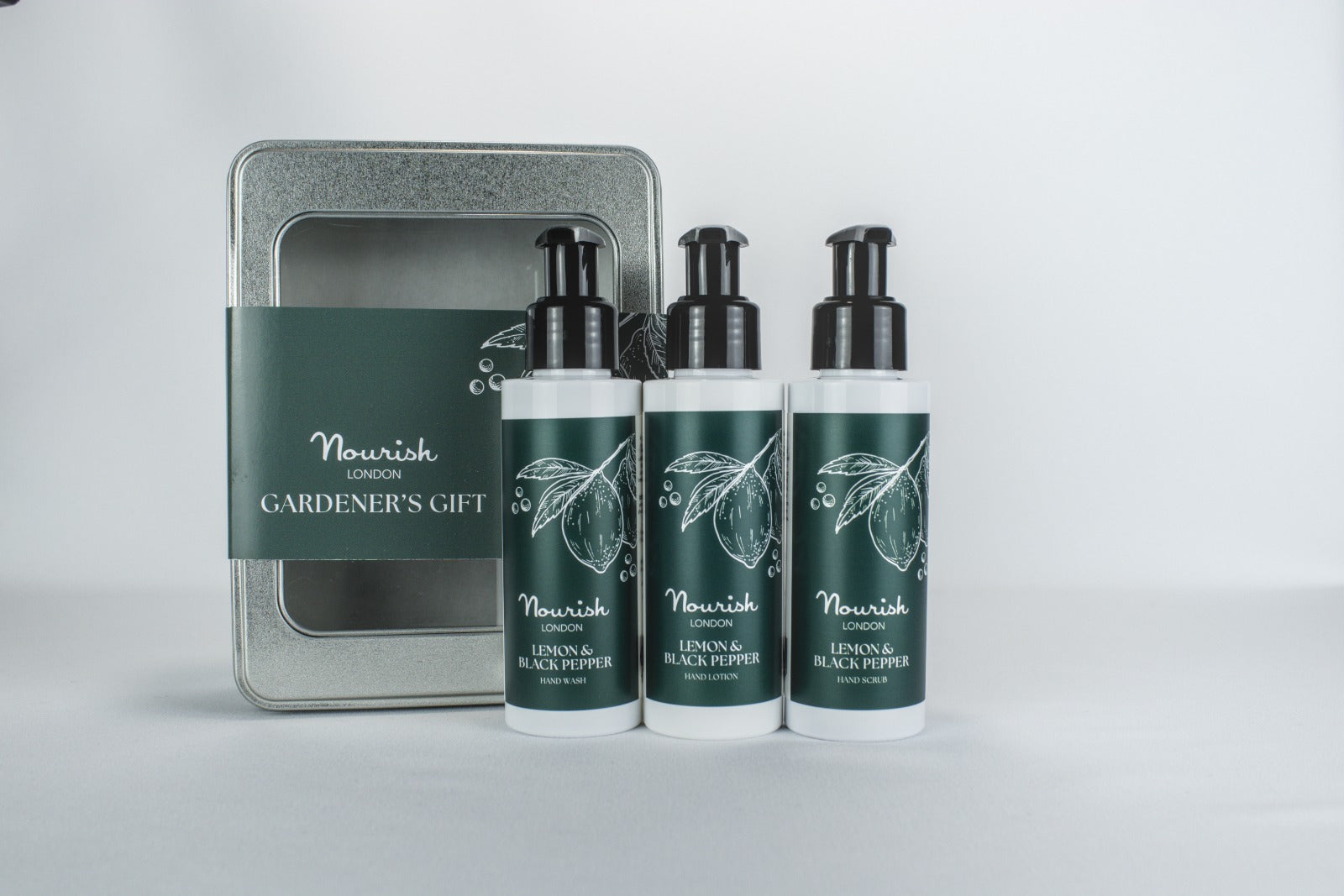
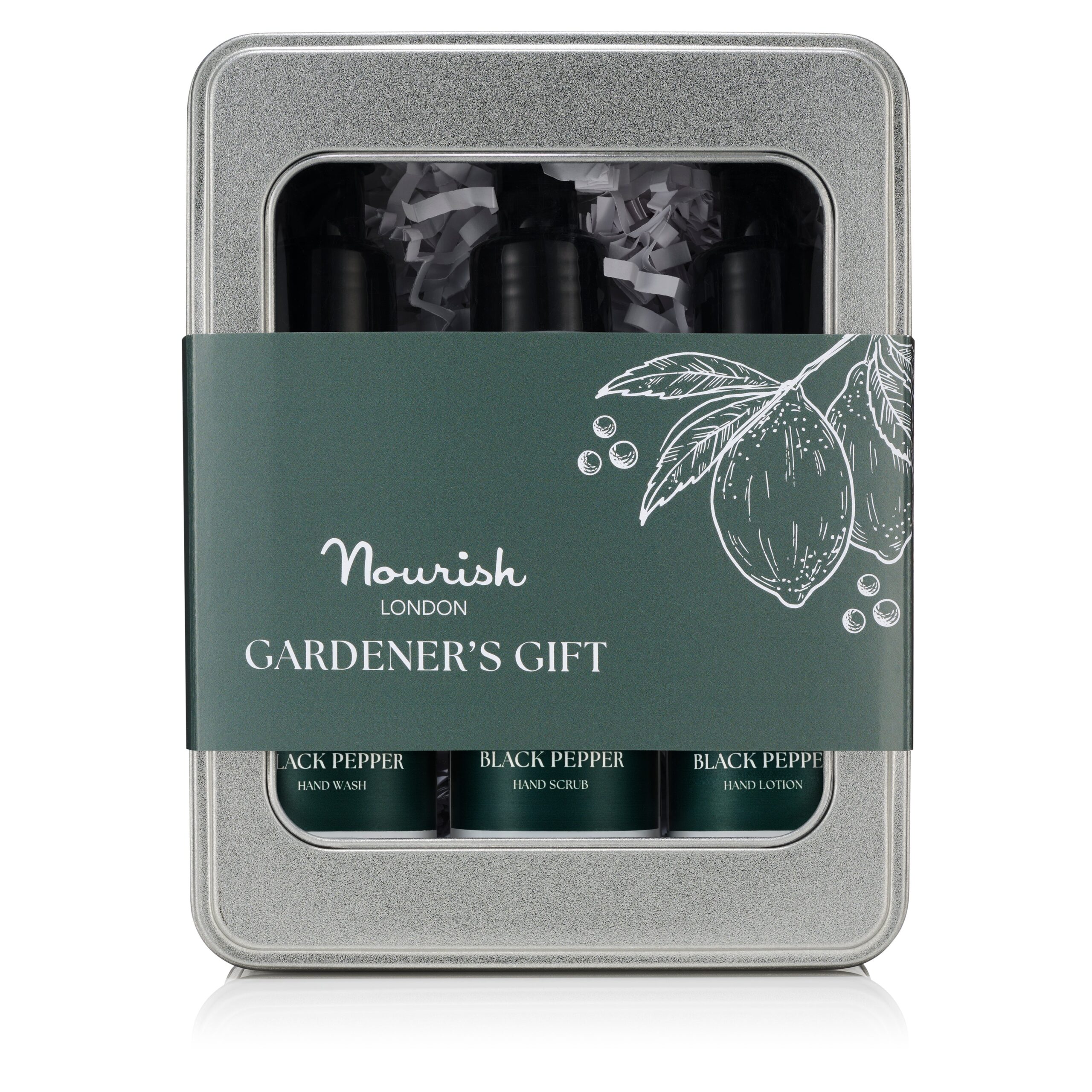
Overlooked categories often reveal a lot about how seriously a brand treats its own range. Hands and body cleansing remain underestimated steps despite repeated daily contact with pollutants and sun exposure. The brand addresses this space with dedicated products like the Lemon & Black Pepper Antibacterial Hand Wash with Ho Leaf, priced at €16.95, and extends the concept further with The Gardener’s Gift Set, a complete hand-care ritual priced at €25.95 that contains three certified organic products in 100ml sizes: a Hand Wash, Hand Scrub, and Hand Lotion. The set’s framing as a ready-to-gift collection signals confidence in hand care as a complete skincare category rather than an afterthought. Travel formats also reflect product range maturity. The Antioxidant Peptide Mist with Hyaluronic Acid is offered in both full size from €8.95 and a travel size at €8.95, acknowledging that portable skincare lets the range work across different settings and lifestyles. Nourish London treats hands and mobile skincare not as lesser categories but as integral to the complete skincare picture.
Toning Mists and Targeted Concerns in a Single Step
Toning mists occupy an interesting position in skincare routines. They layer easily between cleansing and treatment steps, and the brand has built a dedicated mist line around different skin concerns rather than offering a single formula.
- The Balance Refining Toning Mist with Niacinamide & Apple Extract, priced at €17.95, targets oily and combination skin.
- The Relax Soothing Toning Mist with Lavender & Carrot, also at €17.95, addresses sensitivity and reactive skin.
- The Radiance Refreshing Toning Mist with Foxberry & Rose, priced at €17.95, and the Protect Cooling Toning Mist with Lemon & Mandarin, also at €17.95, branch the mist concept further to address additional skin conditions.
This segmentation means each formula can include actives specific to the concern it addresses rather than building a one-size product that dilutes effectiveness across multiple priorities. The result is a set of products that each perform clearly within their assigned category.
Targeted Treatment Products Beyond the Standard Routine
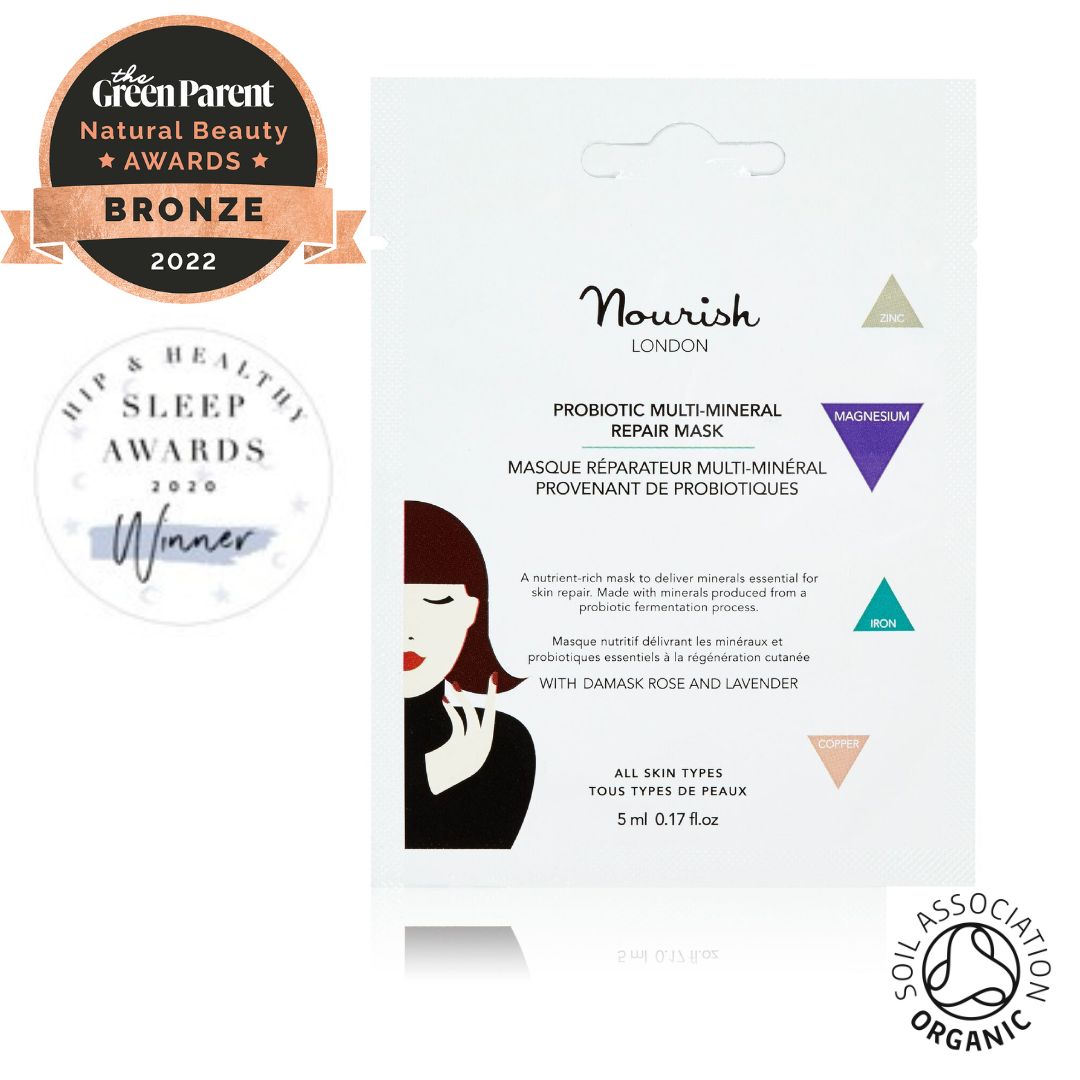
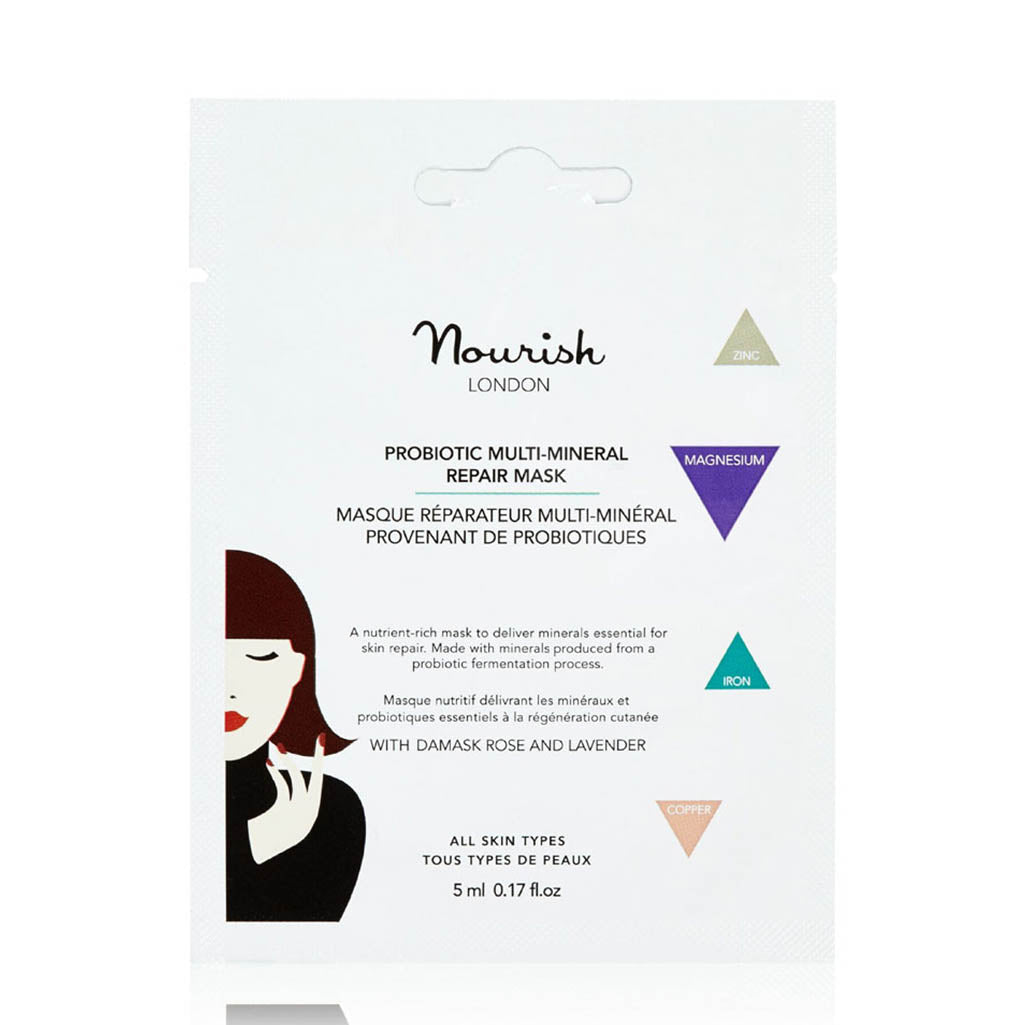
Recovery and intensive treatment products separate working skincare from occasional indulgence. The Probiotic Multi-Mineral Repair Mask with Magnesium, available as single-use sachets at €5.95 or multi-use jars from €5.95, brings probiotic minerals and magnesium to deliver what Nourish London describes as nutrient-rich treatment suited to skin repair. The Kale Anti-Ageing Eye Cream with Peptides & Hyaluronic Acid, priced at €37.95, concentrates anti-ageing actives where skin is thinnest and most prone to visible ageing. The T.S.L Tighten, Sculpt and Lift Neck Cream with Peptides, priced at €30.95, extends the anti-ageing principle to the neck, a zone frequently neglected despite being visible during conversation and prone to the same ageing signals as the face. These products exist because It treats different zones of the face and body as having distinct needs rather than applying the same serum or moisturiser everywhere. The specificity of targeting suggests a brand thinking past the basics of cleanse-tone-moisturise toward actual skin complexity.
Global Access and Delivery Options
Practical skincare is only practical if products reach the customer. Nourish London offers next-day delivery as standard and free delivery within the UK, removing friction from the purchase decision. Global delivery is available as well, reflecting the reality that organic, vegan, and certified skincare appeals across geographies, not just in one domestic market. These logistics choices matter because they mean the range is designed for actual use rather than sitting in a cupboard waiting for an occasion to justify the purchase or months of waiting for international shipment to justify an order.
The Case Against Myths
Organic, alcohol-free, and vegan skincare has evolved dramatically from the limited, fragrant but ineffective products that built its reputation in the first place. Ranges like Nourish London, with multiple concentrations of proven actives, dedicated treatment products, and segmented formulas for different skin types and concerns, make the old assumptions harder to defend. None of these products succeed because they are organic; they succeed because their formulas treat organic certification as compatible with ingredient sophistication rather than as a substitute for it.

Leave Your Comment